Iran's Strategic Readiness for War: A Shift Towards a Multipolar World
March 3, 2026
The 2026 Iran Conflict: Strategic Attrition in a Multipolar Age
The ongoing military operations in the Middle East, particularly those involving Iran, the United States, and the Gulf Cooperation Council (GCC) nations, are shifting the global order. The conflict, now widely observed as a turning point in 21st-century warfare, presents a series of fundamental strategic dilemmas that go beyond mere air superiority.
The Ground Invasion Dilemma
A recurring question in the current operational theater is whether air strikes alone can achieve regime change or strategic dominance. Historical precedent suggests that air power, while devastating, often falls short of producing total political shifts.
-
The Necessity of Ground Forces: Conventional military theory dictates that occupying or controlling territory—and by extension, forcing a government to capitulate—requires boots on the ground.
-
The Political Cost: There is a significant divergence between military requirements and domestic political will. With public polling—such as the recent figures suggesting 78% of Americans oppose a ground war—the administration faces a paradox: the military objective may require a ground component, but the political cost of implementing one could be destabilizing.
The Gulf’s Strategic Vulnerability
The conflict has exposed the "Achilles' heel" of the Gulf states (Saudi Arabia, UAE, Bahrain, and Qatar). Their economic survival is inextricably linked to infrastructure that is increasingly vulnerable to asymmetric warfare.
-
Water Security: The region relies heavily on water desalination, with some estimates citing that 60% of their freshwater supply is artificially produced. Attacks on these facilities could lead to a humanitarian and systemic collapse in weeks.
-
Import Reliance: With nearly 90% of food imported, these nations are highly susceptible to supply chain disruptions—a reality that the "war of attrition" strategy seems designed to exploit.
-
Economic Interdependence: The Gulf states are not merely oil producers; they are major investors in the American economy, funneling capital into stocks and AI data centers. If the regional conflict disrupts oil exports, this funding loop is jeopardized, creating a ripple effect that touches American AI ambitions and broader economic stability.
The Attrition Strategy: Strategic Patience
There is an analytical consensus that Iran is playing a long-term game of "strategic patience." Rather than attempting to match American technological or conventional military superiority head-on, the strategy appears to be one of multi-decade erosion.
-
The Axis of Resistance: By leveraging networks like the Houthis, Hezbollah, and other regional militias, Iran seeks to exhaust the resources and political capital of its adversaries.
-
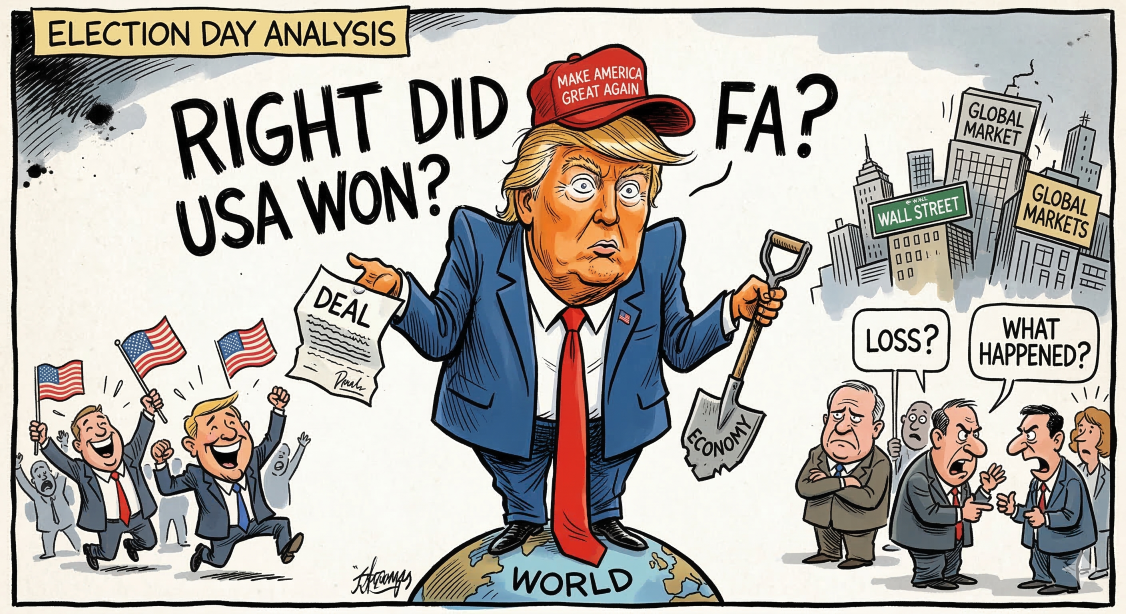
The American Decline Thesis: This analysis suggests that Iran operates under the belief that America’s influence is waning—transitioning from a post-Cold War hegemon to one actor in a multipolar world. The "war of attrition" is designed to exploit the gap between America’s expensive, complex defense apparatus and the shifting global geopolitical reality.
Economic and Military Imbalance
The fiscal dimension of the war is as critical as the tactical one. The immense costs associated with high-tech power projection have sparked debate over the sustainability of a prolonged conflict.
-
The Defense-Industrial Complex: The American defense system was engineered for a specific era. Maintaining it at current operational tempos requires resources that may not align with the current multipolar distribution of power.
-
Economic Reliance: The theory that Gulf states fund the "petrodollar" economy creates a unique vulnerability. If this funding dries up, the underlying model of the American economy—which critics argue is heavily reliant on this cycle—faces significant risks.
Conclusion: A Clash of Paradigms
The situation remains fluid. We are witnessing a transition where traditional military projection is being tested by new forms of regional warfare. Whether the current conflict forces a diplomatic path, such as an Iranian cessation of hostilities in exchange for regional concessions, or escalates into a larger, multi-front ground war, will define the remainder of 2026.
The core question remains: Is the global status quo resilient enough to withstand this attrition, or are we fundamentally entering a new, less predictable era of international relations?