Pakistan’s 2026 Fuel Crisis: Understanding the New 4-Day Workweek and Remote Work Mandate
March 15, 2026
Pakistan’s 2026 Fuel Crisis: Understanding the New 4-Day Workweek and Remote Work Mandate
Meta Description: Stay updated on Pakistan's March 2026 austerity measures. Learn about the new 4-day workweek, the 50% remote work mandate, and nationwide school closures driven by the global fuel crisis.
In March 2026, Pakistan's economic landscape is undergoing a massive shift. Driven by severe global fuel shortages linked to the ongoing Middle East conflict, Prime Minister Shehbaz Sharif has announced unprecedented nationwide austerity measures.
For local businesses, government employees, and families, these new policies are completely reshaping daily routines. Here is a comprehensive breakdown of the new work and education mandates and what they mean for the country's immediate future.
The 4-Day Workweek and Remote Work Shift
To drastically cut down on national fuel consumption and ease the burden on state resources, the government has overhauled standard operating procedures for public offices.
-
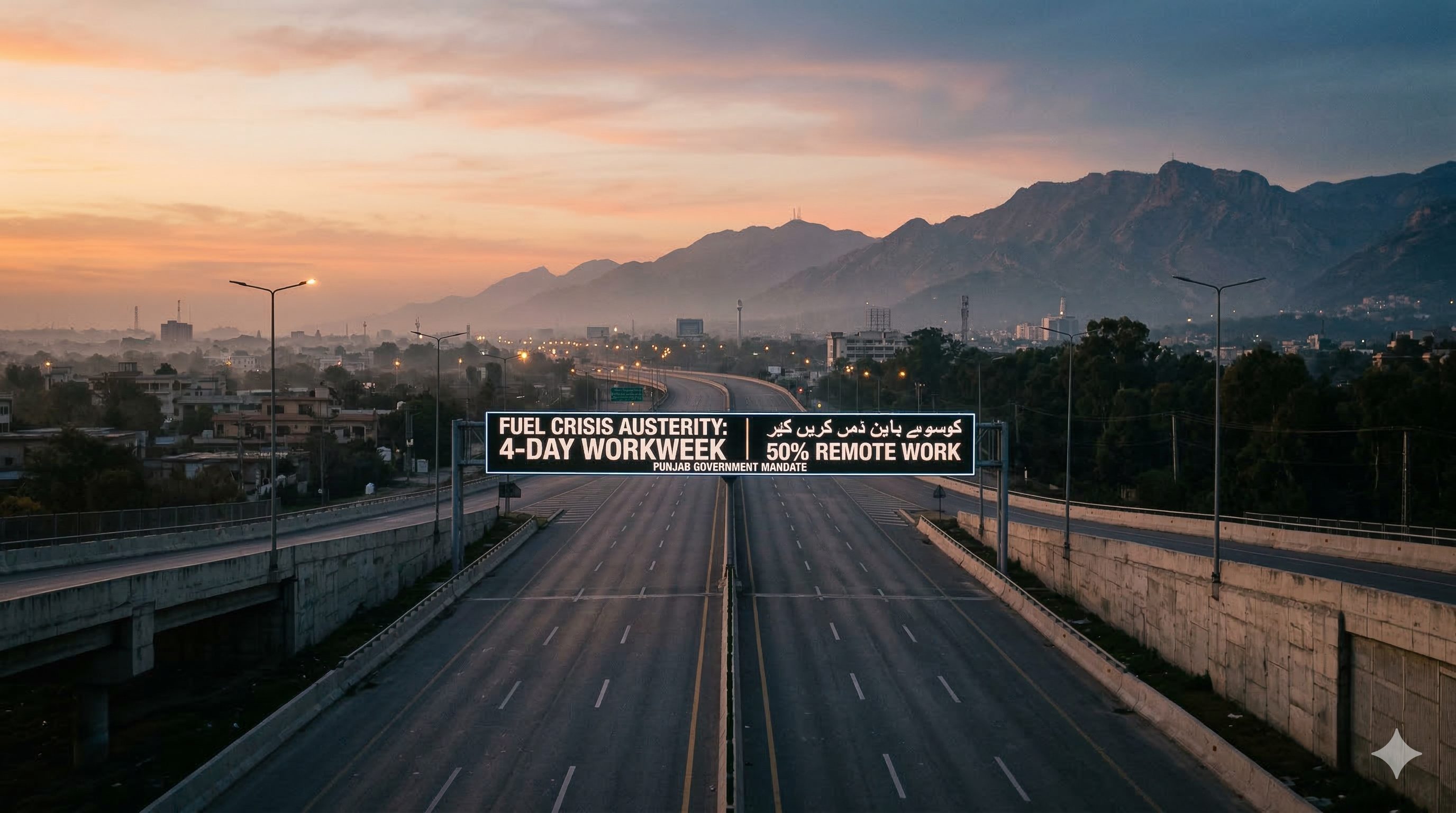
The Four-Day Workweek: Public offices across the country have officially transitioned to a four-day workweek. This move is designed to immediately reduce the fuel consumed by massive daily commutes.
-
50% Remote Work Mandate: Alongside the shortened week, 50% of government staff are now required to work remotely. For central administrative hubs like Islamabad, this means a sudden and massive shift toward digital communication and off-site operations.
-
Salary Adjustments: Employees of state-owned enterprises and autonomous institutions are facing salary cuts ranging from 5% to 30%. Additionally, cabinet members and ministers will forgo their salaries for the next two months to redirect funds toward public relief.
Impact on Education: Nationwide School Closures
The austerity drive extends heavily into the education sector, aiming to keep millions of students and parents off the roads to further conserve fuel.
-
Temporary Shutdowns: All schools across Pakistan have been ordered to close for two weeks, effective mid-March.
-
Shift to Online Learning: Universities and higher education institutions are not pausing their curriculums; instead, they have been directed to shift immediately to online classes, reviving digital learning models.
The Root Cause: Global Energy Shocks
These drastic domestic changes are a direct reaction to international geopolitical instability. The escalating conflict in the Middle East has heavily disrupted global energy flows, sending crude oil prices skyrocketing.
Because Pakistan relies heavily on imported fuel, the nation is exceptionally vulnerable to these global energy shocks. By enforcing a 50% cut in fuel allowances for government departments, taking 60% of official vehicles off the road, and banning the purchase of new government vehicles, the state is attempting to manage a rapidly depleting energy supply.
Conclusion
As Pakistan navigates this severe energy crisis, the immediate future will require immense adaptability from its workforce and students. The shift to a four-day workweek and remote operations is a necessary survival tactic in the face of global volatility, and these measures are likely to set a precedent for how the nation handles future economic shocks.