The Last Table at Café Miriam : Story
March 27, 2026
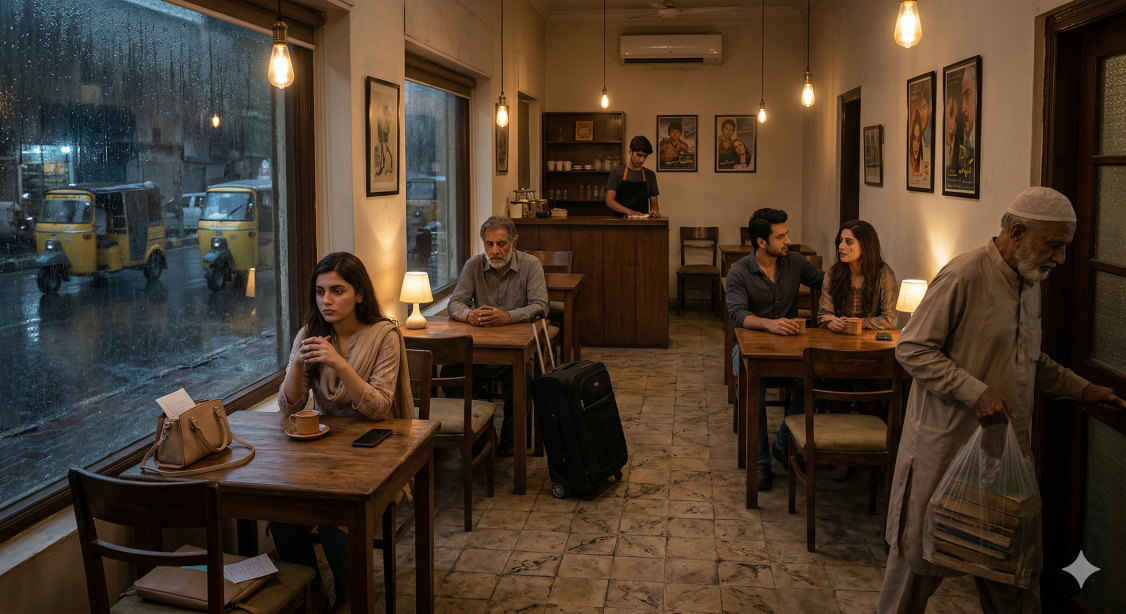
The rain came without warning on a Thursday evening in Lahore, the kind that turns the city into a mirror — every streetlight doubled, every voice swallowed by water.
Café Miriam had six tables. That night, five of them were empty.
Hina arrived first, shaking rain from her dupatta, a resignation letter folded in her purse. Twenty-nine years old, and she had just walked out of the only job she'd ever known. Her hands wouldn't stop trembling. She ordered chai she didn't intend to drink and stared at her phone — seventeen unread messages from her mother. She didn't open a single one.
Raza came in next, dragging a suitcase with a broken wheel that scraped against the tile like a slow protest. He was fifty-three, returning from Karachi after burying his older brother — the brother he hadn't spoken to in eleven years. He'd made it to the funeral. He hadn't made it in time to say anything that mattered. He sat two tables away from Hina and ordered black coffee, then changed it to tea, then apologized to the waiter like it was the most important decision left in his life.
Then came Zara and Bilal — not a couple, though they walked in like one. Two colleagues from the same office, both pretending they hadn't just had the argument that would end their friendship. They sat across from each other, menus held up like shields. Zara's mascara was slightly smudged. Bilal kept clearing his throat.
And finally, almost comically late, an elderly man named Chacha Saleem shuffled in with a plastic bag full of books he was donating to no one in particular. He lived three streets away. He came here every Thursday because his wife used to. She had been gone for two years. He always took the corner table. He always ordered what she would have ordered — karahi chai and a single rusk.
The waiter, a teenager named Dawood, watched all of them from behind the counter and thought: something is wrong with everyone tonight.
It started with the lights going out.
A power cut — the generator sputtered but didn't catch. For four full minutes, Café Miriam existed only in the blue-grey light of the storm outside.
In the dark, Raza laughed. A sudden, involuntary laugh that surprised even him.
"Sorry," he said to no one. "Sorry — it's just. My brother always said Lahore would swallow you whole if you weren't careful." He paused. "I never believed him."
Hina, invisible across the room, said quietly, "What changed your mind?"
"He died," Raza said simply.
Nobody spoke for a moment. The rain filled the silence generously.
Then Chacha Saleem's voice came from the corner — soft, unhurried: "The ones who warn us are usually the ones who already know the way out."
When the lights flickered back on, something had shifted. Not dramatically. Not like in films. Just — the menus came down. The phones went face-down on the tables. Dawood brought everyone fresh chai without being asked.
They didn't become friends. That's the honest part of this story.
Zara and Bilal talked — really talked — for the first time in months, and by the end of the evening they both knew the friendship had run its course. But they also knew it had been real, and that was enough to part without bitterness. Bilal held the door open for her on the way out. She said take care like she meant it. He did too.
Hina showed Raza the resignation letter. She didn't know why. He read it carefully, like it was a document of great importance, and said, "You wrote 'I am grateful for the opportunity' — do you mean that?" She thought about it. "Some of it," she said. He nodded like that was the most honest thing he'd heard in years. She sent it before she left. Her hands had stopped shaking.
Chacha Saleem gave Dawood one of the books from his plastic bag — a worn Urdu poetry collection. "You look like someone who needs words," the old man said. Dawood didn't know what to say. He put it under the counter and later that night read three pages and underlined something without knowing why.
Raza was the last to leave. He stood at the door, suitcase handle in hand, and looked back at the café — at the one table still faintly warm from all of them — and felt something loosen in his chest. Not grief leaving. Just grief making room.
Outside, the rain had softened to something almost gentle.
They went in four different directions, these strangers, carrying versions of the same evening that would never quite match. None of them would see each other again. Lahore is big enough for that kind of disappearance.
But sometimes — on ordinary Thursdays, when the rain comes without warning — one of them will pause. Mid-step. For no reason they can explain.
And feel, faintly, less alone.
The last table at Café Miriam was empty by nine. Dawood wiped it down. Turned off the lights. Went home and finished the poem.
STORY IN URDU AS WELL
کیفے مریم کی آخری میز
بارش بغیر کسی اطلاع کے آئی — ایک جمعرات کی شام، لاہور پر۔ وہ بارش جو شہر کو آئینہ بنا دیتی ہے — ہر روشنی دوگنی، ہر آواز پانی میں گم۔
کیفے مریم میں چھ میزیں تھیں۔ اس رات پانچ خالی تھیں۔
ہنا سب سے پہلے آئی، اپنے دوپٹے سے بارش جھاڑتی ہوئی۔ اس کے پرس میں ایک استعفیٰ کا خط تھا، تہہ کیا ہوا۔ انتیس سال کی عمر میں اس نے وہ نوکری چھوڑ دی تھی جو اس کی پوری زندگی تھی۔ ہاتھ کانپ رہے تھے۔ اس نے چائے منگوائی جو اس نے پینی نہیں تھی، اور فون کی اسکرین کو گھورتی رہی — امی کے سترہ بے پڑھے پیغامات۔ ایک
بھی نہ کھولا۔
رضا اس کے بعد آیا — ایک ٹوٹے پہیے والا سوٹ کیس گھسیٹتے ہوئے، جو فرش پر ایسے رگڑتا تھا جیسے کوئی آہستہ احتجاج کر رہا ہو۔ تریپن سال کا یہ آدمی کراچی سے لوٹا تھا — اپنے بڑے بھائی کو دفنا کر، جس سے اس نے گیارہ سال بات نہیں کی تھی۔ جنازے میں پہنچ گیا تھا۔ مگر وہ بات کہنے سے پہلے نہیں پہنچ سکا جو کہنی تھی۔ اس نے ہنا سے دو میزیں دور بیٹھ کر کالی قہوہ منگوائی، پھر چائے کہا، پھر بیرے سے معافی مانگی — جیسے یہ اس کی زندگی کا سب سے اہم فیصلہ ہو۔
پھر زارا اور بلال آئے — جوڑے کی طرح، مگر جوڑا نہیں تھے۔ ایک ہی دفتر کے ساتھی، جو ابھی وہ لڑائی لڑ کر آئے تھے جو ان کی دوستی کا آخری باب ثابت ہوگی۔ مینو کو ڈھال کی طرح اٹھائے آمنے سامنے بیٹھ گئے۔ زارا کا کاجل ہلکا سا بہا ہوا تھا۔ بلال بار بار گلا صاف کر رہا تھا۔
اور آخر میں، تقریباً مضحکہ خیز تاخیر سے، چاچا سلیم آئے — پلاسٹک کے تھیلے میں کتابیں لیے جو وہ کسی کو بھی دینے کے لیے لائے تھے۔ تین گلیاں چھوڑ کر رہتے تھے۔ ہر جمعرات یہاں آتے تھے — کیونکہ ان کی بیگم آتی تھیں۔ دو سال پہلے وہ چلی گئی تھیں۔ چاچا سلیم ہمیشہ کونے والی میز لیتے اور وہی منگواتے جو وہ منگواتی تھیں — کڑاہی چائے اور ایک رسک۔
بیرا داؤد، ایک نوعمر لڑکا، کاؤنٹر کے پیچھے سے سب کو دیکھ رہا تھا اور سوچ رہا تھا: آج رات سب کے ساتھ کچھ نہ کچھ ہوا ہے۔
پھر بجلی چلی گئی۔
جنریٹر نے کوشش کی، مگر نہ چلا۔ پورے چار منٹ — کیفے مریم صرف باہر کی طوفانی نیلی روشنی میں ڈوبی رہی۔
اندھیرے میں رضا کو اچانک ہنسی آگئی۔ ایسی ہنسی جو خود اسے بھی حیران کر گئی۔
"معاف کرنا،" اس نے کہا، کسی کو مخاطب کیے بغیر۔ "معاف کرنا — بس یہ کہ میرے بھائی ہمیشہ کہتے تھے کہ لاہور انسان کو نگل لیتا ہے اگر وہ ہوشیار نہ ہو۔" رکا۔ "مجھے کبھی یقین نہیں آیا۔"
کمرے کے اس پار سے، اندھیرے میں، ہنا کی آواز آئی — دھیمی، لیکن صاف:
"یقین کب آیا؟"
"جب وہ چلے گئے،" رضا نے سادگی سے کہا۔
کچھ دیر کوئی نہ بولا۔ بارش نے خاموشی کو فراخ دلی سے بھر دیا۔
پھر کونے سے چاچا سلیم کی آواز آئی — نرم، بے عجلت:
"جو ہمیں راستے سے آگاہ کرتے ہیں، وہ اکثر وہی ہوتے ہیں جنہیں نکلنے کا راستہ پہلے سے معلوم ہوتا ہے۔"
جب بجلی واپس آئی — تو کچھ بدل چکا تھا۔ فلموں جیسا نہیں — بس اتنا کہ مینو نیچے آ گئے۔ فون اوندھے ہو گئے۔ داؤد نے بغیر کہے سب کے لیے تازہ چائے لا دی۔
وہ دوست نہیں بنے۔ یہ اس کہانی کا سچا حصہ ہے۔
زارا اور بلال نے بات کی — مہینوں بعد پہلی بار اصل بات۔ اور شام کے آخر تک دونوں جان چکے تھے کہ یہ دوستی اپنا سفر پورا کر چکی ہے۔ مگر یہ بھی جانتے تھے کہ یہ دوستی حقیقی تھی — اور بس یہی کافی تھا۔ بلال نے باہر جاتے وقت دروازہ کھول کر رکھا۔ زارا نے خیال رکھنا کہا — جیسے واقعی دل سے کہہ رہی ہو۔ اس نے بھی یہی کہا۔
ہنا نے رضا کو استعفیٰ کا خط دکھایا — نہیں جانتی تھی کیوں۔ اس نے اسے غور سے پڑھا، جیسے یہ کوئی اہم دستاویز ہو، اور پوچھا: "آپ نے لکھا ہے 'میں اس موقع کے لیے شکر گزار ہوں' — کیا واقعی ہیں؟" ہنا نے سوچا۔ "کچھ حد تک،" اس نے کہا۔ رضا نے سر ہلایا — جیسے یہ برسوں میں سنی سب سے سچی بات ہو۔ جاتے جاتے ہنا نے خط بھیج دیا۔ ہاتھ کانپنا بند ہو چکے تھے۔
چاچا سلیم نے داؤد کو تھیلے میں سے ایک کتاب نکال کر دی — اردو شاعری کا پرانا مجموعہ۔ "لگتا ہے تمہیں الفاظ کی ضرورت ہے،" بوڑھے نے کہا۔ داؤد کچھ نہ بول سکا۔ اس نے کتاب کاؤنٹر کے نیچے رکھ دی اور رات کو گھر جا کر تین صفحے پڑھے اور ایک مصرع کے نیچے لکیر کھینچ دی — بغیر جانے کیوں۔
رضا سب سے آخر میں نکلا۔ دروازے پر رک کر اس نے پلٹ کر کیفے کو دیکھا — اس ایک میز کو جو ابھی تک سب کی گرمی سمیٹے ہوئے تھی — اور محسوس کیا کہ سینے میں کچھ ڈھیلا ہو گیا ہے۔ غم نہیں گیا — بس غم نے تھوڑی جگہ بنا لی۔
باہر بارش نرم ہو چکی تھی — تقریباً مہربان۔
وہ چار سمتوں میں چلے گئے، یہ اجنبی لوگ — ایک ہی شام کو اپنے اپنے انداز میں اٹھائے، جو کبھی ایک جیسی نہیں ہوگی۔ وہ دوبارہ نہیں ملے۔ لاہور اتنا بڑا ہے — اس طرح کے غائب ہو جانے کے لیے۔
مگر کبھی کبھی — کسی عام جمعرات کو، جب بارش بغیر اطلاع کے آتی ہے — ان میں سے کوئی ایک رک جاتا ہے۔ قدم کے بیچ میں۔ بغیر کسی وجہ کے۔
اور محسوس کرتا ہے — دھیرے سے — کہ وہ اتنا اکیلا نہیں۔
رات نو بجے کیفے مریم کی آخری میز خالی ہو گئی۔ داؤد نے اسے صاف کیا۔ بتیاں بجھائیں۔ گھر گیا اور نظم پوری کی۔