Markets in Crisis: A Structural Shock to the Global Economy
March 9, 2026
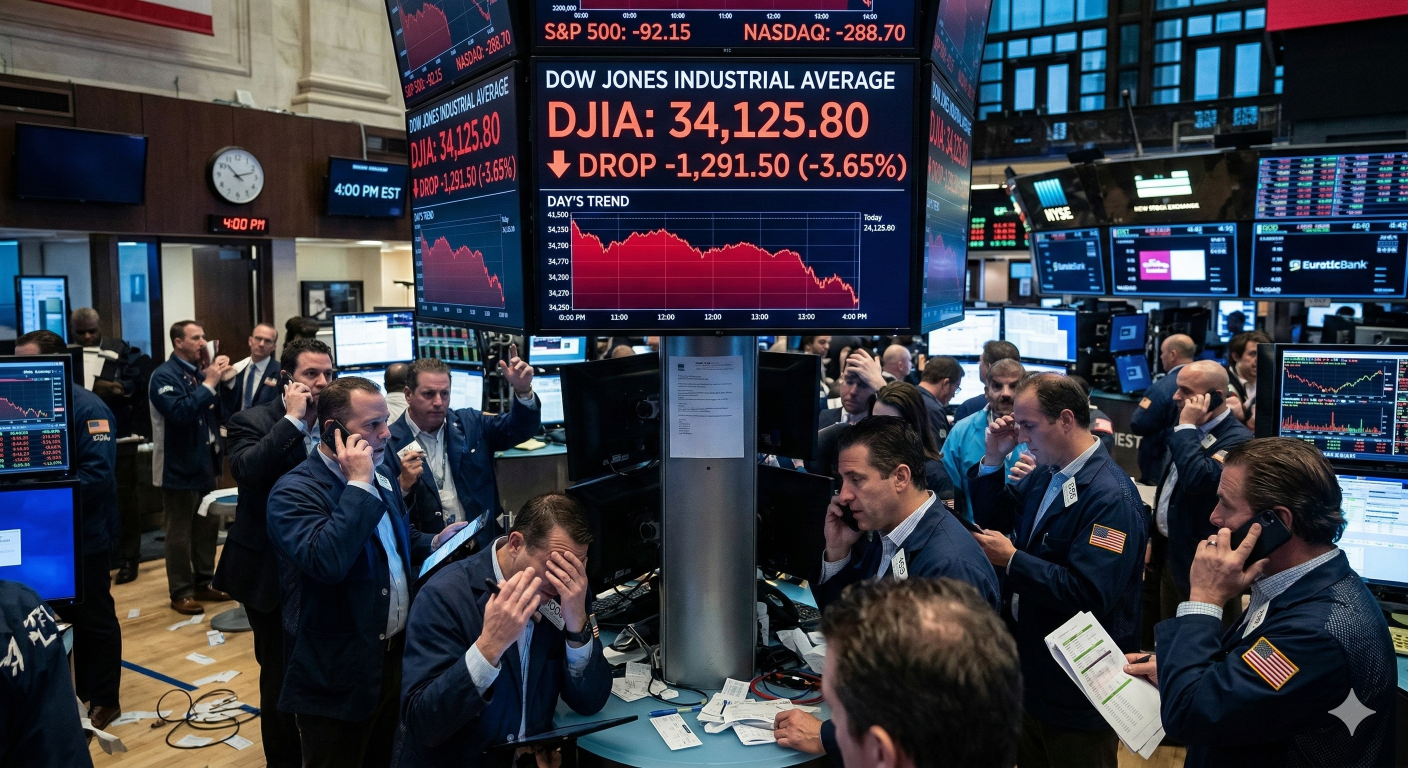
Markets in Crisis: A Structural Shock to the Global Economy
The financial landscape shifted dramatically on March 9, 2026, as major indices—including the Dow Jones, S&P 500, and Nasdaq—plunged amidst a sudden, multi-faceted crisis[cite: 1, 13, 14]. What began the year with significant optimism around AI and rate cuts has quickly soured into a challenging economic environment defined by geopolitical shocks and the haunting specter of stagflation[cite: 27, 28, 142]. This article breaks down the immediate market impact and what investors need to know to navigate the days ahead.
The Market Situation
For millions of investors checking the Dow Jones today, the numbers are brutal[cite: 12]. The index plummeted more than 800 points in morning trading, while the S&P 500 has officially erased all its gains for the year[cite: 13, 33]. Meanwhile, the Nasdaq is sliding as tech sectors face a perfect storm of higher energy costs and rising Treasury yields[cite: 14, 41].
A word not heard since the 1970s is suddenly on every economist's lips: stagflation[cite: 15]. This is not a routine market correction; it is a confluence of shocks—soaring oil prices, a collapsing jobs report, and a paralyzed Federal Reserve—all arriving at the same moment[cite: 16].
Stagflation: The Nightmare Scenario
Stagflation describes an economy experiencing the worst of both worlds simultaneously: rising inflation and rising unemployment, with stagnant or contracting growth[cite: 49].
"Stagflation is the ultimate nightmare for a central banker. You have two fires burning in opposite directions, and you only have one fire extinguisher." — Senior analyst, Apollo Global Management [cite: 53, 54]
The February 2026 jobs report delivered a gut punch, with nonfarm payrolls falling by 92,000 and the unemployment rate rising to 4.4%[cite: 56, 57]. Concurrently, energy costs are rising, with oil surging above $100 per barrel[cite: 58]. In stagflation, the Federal Reserve cannot cut rates to rescue the economy, because doing so would pour gasoline on the inflation fire[cite: 66].
Oil: The Engine Driving the Market Down
Every red number on the screen traces back to one event: the effective closure of the Strait of Hormuz following U.S.-Israeli military strikes on Iran[cite: 71]. The strait carries roughly 20 million barrels of oil per day, about 20% of all global oil trade[cite: 72]. With supply collapsing, crude prices exploded, and WTI is up more than 50% in March alone[cite: 74].
Biggest Losers and Surprising Winners
- Airlines: United Airlines (UAL) is down over 6%, with Southwest and Delta facing potential wipeout of 2026 earnings projections[cite: 80].
- Transport & Logistics: The Dow Transports are down 9% over three sessions, marking the biggest decline since April 2025[cite: 81].
- Energy Stocks (Winner): The entire S&P energy sector is the only green sector today, with U.S. shale producers being the unambiguous winners[cite: 88, 89].
- Gold: Despite a mild pullback, gold surpassed $5,000 per ounce for the first time ever this weekend[cite: 90, 119].
The Fed Is Paralyzed
The Federal Reserve entered 2026 holding rates at 3.5–3.75%, but today's combination of spiking energy prices and a collapsing jobs market has blown up that timeline entirely[cite: 95, 96]. If the Fed cuts to save jobs, it pours gasoline on the inflation fire; if it holds to fight inflation, it lets the unemployment fire spread[cite: 100, 101].
A Practical Investor's Guide for March 2026
Disclaimer: This is not personalized financial advice. Always consult a qualified financial professional[cite: 104].
- Don't Panic-Sell: Market history is unambiguous that panic selling near lows is typically the worst decision[cite: 106].
- Energy Sector: It is the clear beneficiary, having returned over 25% in 2026—more than double the next-best sector[cite: 112].
- Defensive Plays: Health care and consumer staples historically hold up better in stagflation[cite: 116].
- Gold: Gold has crossed $5,000, continuing its historical trend of performing well during geopolitical crises and dollar weakness[cite: 119, 120].
- Watch the Key Levels: Technical analysts are watching the 6,800 level on the S&P 500; a sustained break below this could signal further selling[cite: 123, 124].
Conclusion
The trajectory of this crisis hinges on complex variables: diplomatic progress in the Strait of Hormuz, the resilience of key technical levels like the S&P 500's 6,800 mark, and the Federal Reserve's ability to navigate the stagflationary trap[cite: 130, 145]. While the current market stress is profound, it serves as a critical reminder to resist the urge to panic-sell and instead focus on long-term risk management and diversified strategies[cite: 106, 109].
Sources: Yahoo Finance, CNBC, TheStreet, 24/7 Wall St., Trading Economics, FinancialContent, U.S. News & World Report, Stanford SIEPR, Apollo Global Management, RSM US, Wellington Management, Motley Fool, KPMG Economic Compass — March 2026[cite: 147].