When Will the War in Iran End?
March 10, 2026
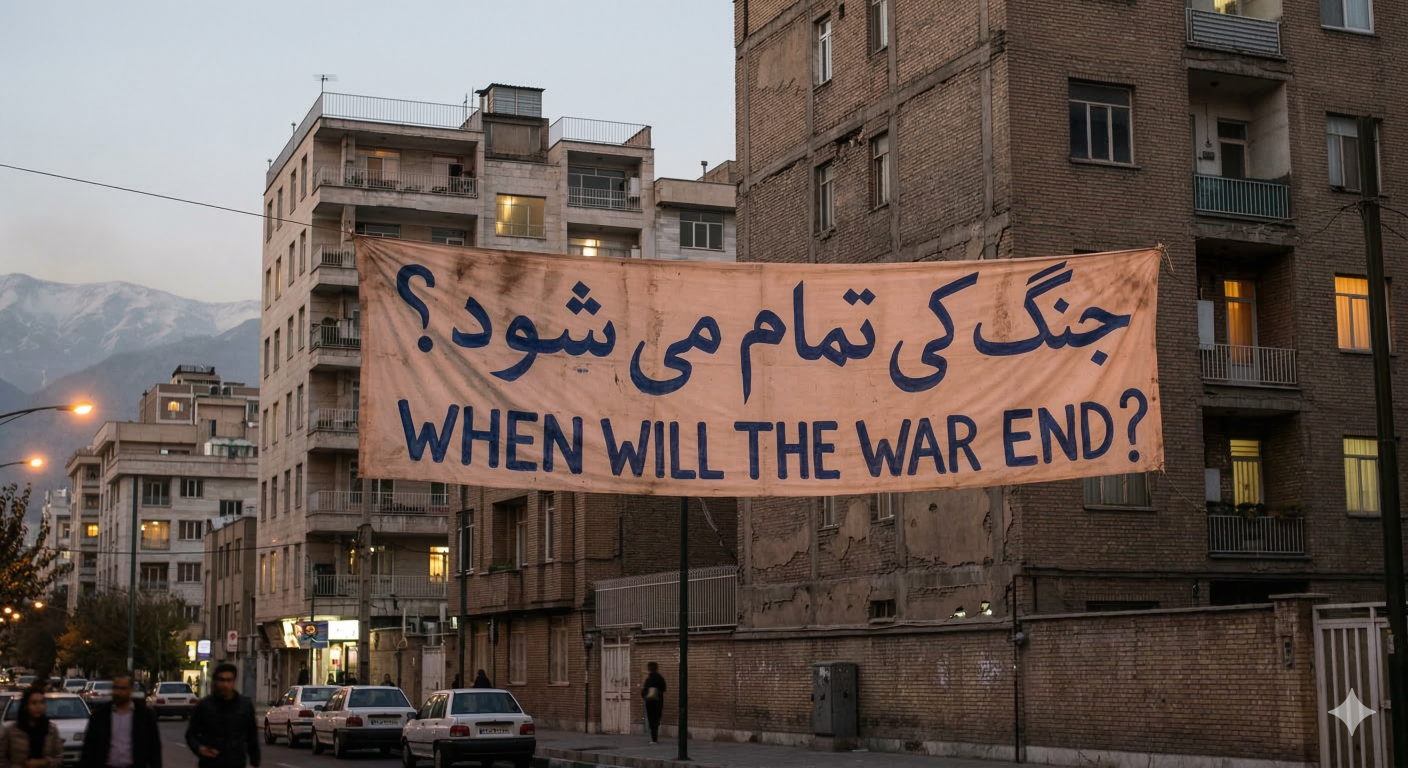
A deep dive into the current US-Israel conflict with Iran, the obstacles to peace, and what experts predict
March 10, 2026 | By World Affairs Desk
The Middle East is once again engulfed in a devastating conflict. Since US and Israeli forces launched coordinated strikes against Iran on February 28, 2026 — assassinating Supreme Leader Ali Khamenei and targeting military installations across the country — the world has been holding its breath. Now, as the war enters its second week with no ceasefire in sight, the question on everyone's mind is: how and when will this end?
How the War Began
The conflict did not emerge overnight. Tensions between Iran and the United States had been escalating throughout early 2026 following a series of failed nuclear negotiations. In February, Iranian Foreign Minister Abbas Araghchi had signaled that a "historic" agreement to avert military conflict was "within reach" ahead of talks in Geneva. Just days later, those hopes collapsed.
On February 28, the US and Israel launched what became one of the most consequential military operations in the modern Middle East. Khamenei was killed in the strikes. Early on March 1, Iranian state media confirmed his death — a seismic moment that plunged Tehran's leadership structure into chaos and set off a wave of Iranian retaliatory missile and drone attacks across the region.
The State of the War Today
As of March 10, 2026 — Day 11 of the conflict — fighting continues on multiple fronts. Iran's Islamic Revolutionary Guard Corps (IRGC) reported firing over 500 ballistic and naval missiles and nearly 2,000 drones since the war began, with roughly 40% directed at Israel and 60% toward US targets in the region. US Defense Secretary Pete Hegseth has warned that Tuesday, March 10, will be among the most intense days of strikes against Iran since the war's start.
The conflict has already spread well beyond Iran's borders. Gulf states, including Saudi Arabia, Qatar, Kuwait, and the UAE, have been struck by Iranian retaliatory drone attacks. The US government ordered non-emergency staff to leave Saudi Arabia. Oil prices briefly surged above $110 per barrel. Amazon's cloud data centers in Bahrain were damaged. An 11-year-old girl in Kuwait was killed in the strikes. The human and economic toll is rising by the day.
Iran's leadership transition has added another layer of volatility. On March 8, the Assembly of Experts selected Mojtaba Khamenei — the son of the assassinated Supreme Leader — as the new Supreme Leader, a development that former CIA officials have described as "unfortunate" for prospects of de-escalation.
Why Ending This War Is So Difficult
On the surface, Trump has sent mixed signals. He has suggested the war might end "very soon" and even described it as "short-term," but then told House Republicans that "we haven't won enough." His stated goal — removing what he called the "existential threat" of Iran's nuclear and missile program — is far from achieved in the eyes of Washington hawks.
Iran, for its part, has publicly rejected any negotiation or ceasefire. Foreign Minister Araghchi has been unequivocal: Tehran is not asking for a ceasefire, citing the fact that the US launched strikes in the middle of two previous rounds of negotiations. "We see no reason why we should engage once again with those who are not honest in negotiation," Araghchi told NBC News. Iran's top security official Ali Larijani echoed this bluntly: "We will not negotiate with the United States."
Yet behind the scenes, backchannel contacts have emerged. According to officials cited by The New York Times, operatives from Iran's Ministry of Intelligence quietly reached out to the CIA through a third country's intelligence service, offering to discuss terms for ending the conflict. The complication: Iran's fractured leadership structure makes it unclear who actually has the authority to commit to a ceasefire deal.
The Role of Diplomacy and Mediators
Several international actors are pushing for a negotiated exit. Oman — which had mediated pre-war nuclear talks — has called for an "immediate ceasefire" and a return to regional diplomacy. South African President Cyril Ramaphosa has volunteered to mediate, stating, "We want this madness to come to an end." Iran's President Masoud Pezeshkian has acknowledged that some countries have begun mediation efforts.
The International Trade Union Confederation has called for immediate de-escalation and a return to UN-supported diplomacy. China and Russia have both expressed alarm at the regional destabilization, though their public positions have remained measured. The G7 is expected to convene emergency discussions on the crisis.
Scenarios: How This Conflict Could End
Analysts and observers see several possible trajectories:
1. A Rapid US-Declared Ceasefire: Trump has a precedent for this. In June 2025, he announced a ceasefire after 12 days of conflict between the US, Israel, and Iran. If Washington decides that its military objectives — particularly neutralizing Iran's nuclear and missile infrastructure — have been sufficiently achieved, Trump could declare victory and announce a halt. This remains the most likely near-term scenario.
2. Negotiated Settlement Through Backchannel Talks: Despite public posturing, both sides have incentives to stop. Iran's missile stockpiles are reportedly depleting, and its leadership is in disarray. A deal facilitated through Oman or another neutral party — covering nuclear dismantlement in exchange for sanctions relief — remains possible, though Iran's current posture makes this look unlikely in the short term.
3. Protracted Conflict and Regional Escalation: The most alarming scenario is also a real one. If Iran's new Supreme Leader Mojtaba Khamenei takes a hardline stance — and if attacks on Gulf infrastructure continue — more countries could be drawn in. Hezbollah has already resumed rocket attacks on Israel. Lebanon is experiencing renewed Israeli strikes. Pakistan's strategic defense pact with Saudi Arabia has raised questions about its potential involvement.
4. Regime Change in Tehran: Trump has explicitly stated his desire to see Iran's leadership structure "fully removed," suggesting he has names in mind for "a good leader." If the military campaign succeeds in degrading Iran's governing capacity to the point of collapse, the war could "end" not through negotiation but through the forced transformation of Iran's political order — a scenario with profound and unpredictable consequences.
The Human and Economic Cost
The death toll estimates vary widely. US-based human rights groups estimate upwards of 7,000 fatalities; Iranian government figures are lower. But the economic damage is already vast and global. Oil markets have been thrown into turmoil, the Strait of Hormuz — through which more than 20% of the world's oil supply flows — has seen shipping come to a near halt, and tech and energy infrastructure across the Gulf has been targeted. Analysts are warning of potential recession risks if the conflict extends further.
The Bottom Line
There is no clean answer to when this war will end. The honest assessment is that the conflict is at a highly volatile and unpredictable juncture. Trump's statements oscillate between confidence that the war is "nearly over" and determination that the US hasn't "won enough." Iran refuses public negotiations while quietly exploring backchannel options. Mediators are active but lack leverage.
What is clear is that the window for a swift diplomatic resolution is narrowing. The destruction of Iran's missile infrastructure, the killing of key leadership figures, and the deepening instability in Tehran are all making it harder — not easier — to find a credible interlocutor with the authority to make and enforce a deal. As one analyst noted, the more the Iranian system is degraded, the more any negotiation risks resembling a scramble to find someone capable of signing.
The world is watching — and hoping — for a ceasefire. But as of today, March 10, 2026, the guns show no sign of falling silent.
Sources: Al Jazeera, CNN, CNBC, The Guardian, The New York Times, Jerusalem Post, TIME, Iran International, Wikipedia (2026 Iran War)